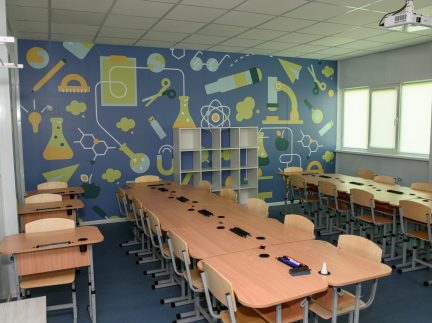
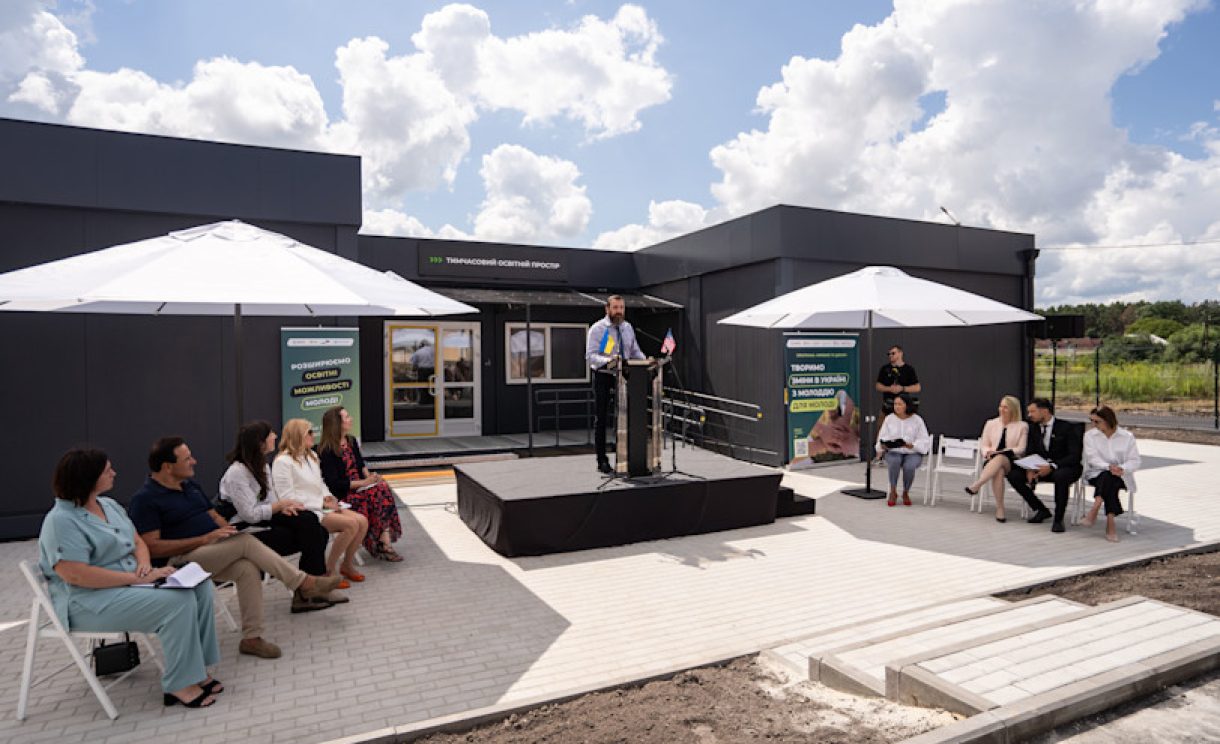
Temporary Learning Spaces — or just TLS — are six modular schools we created together with IREX.
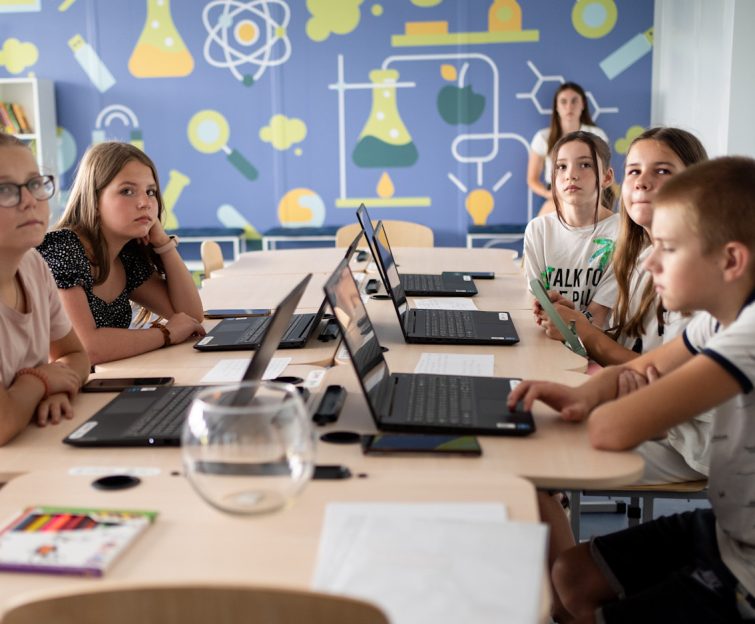
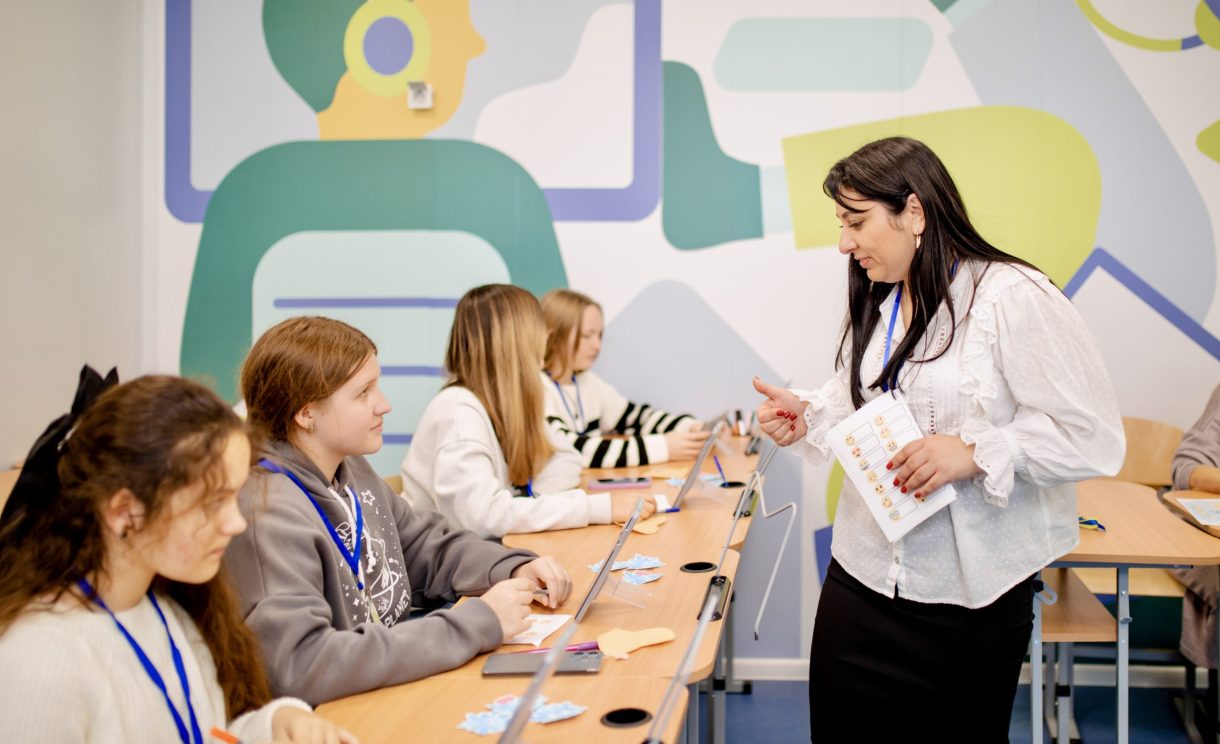
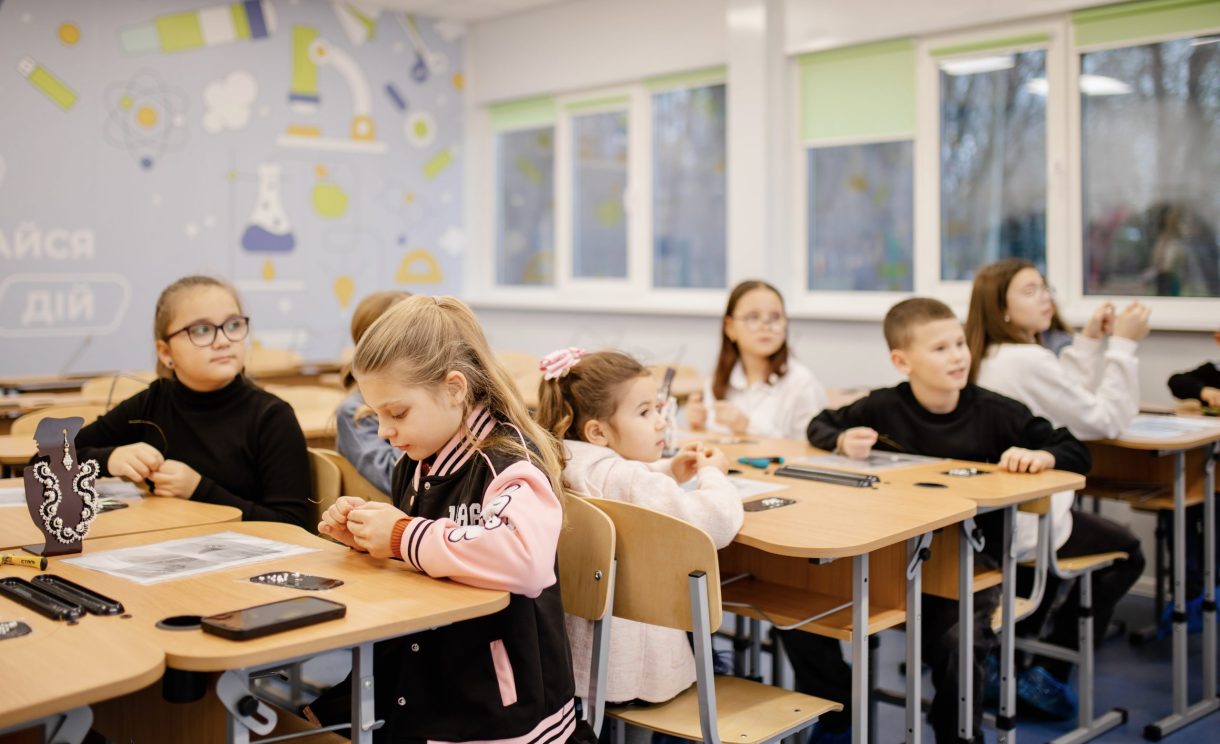
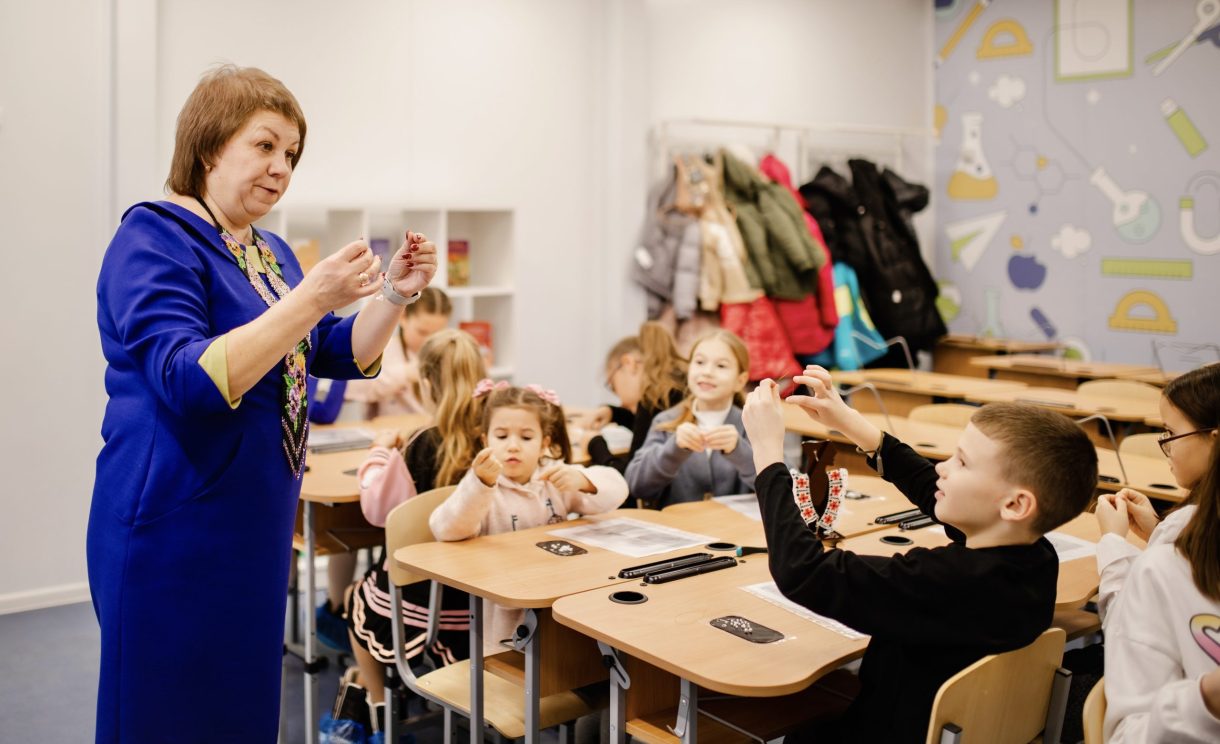
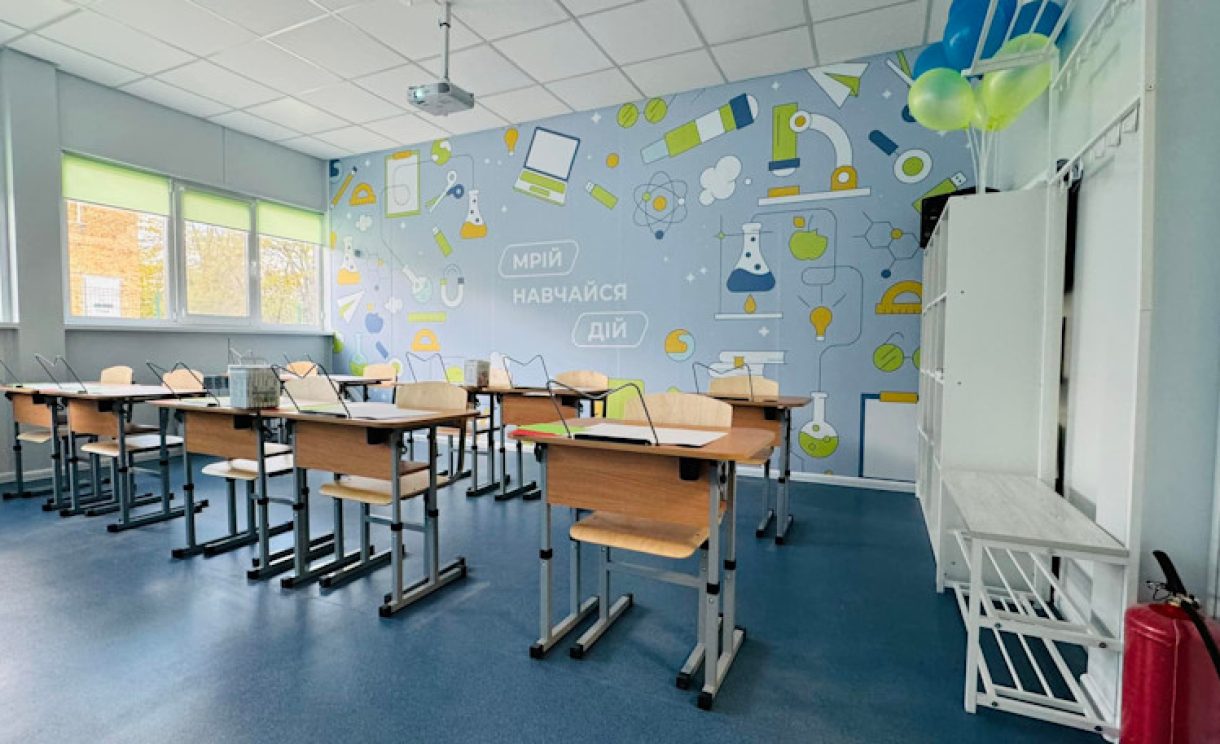
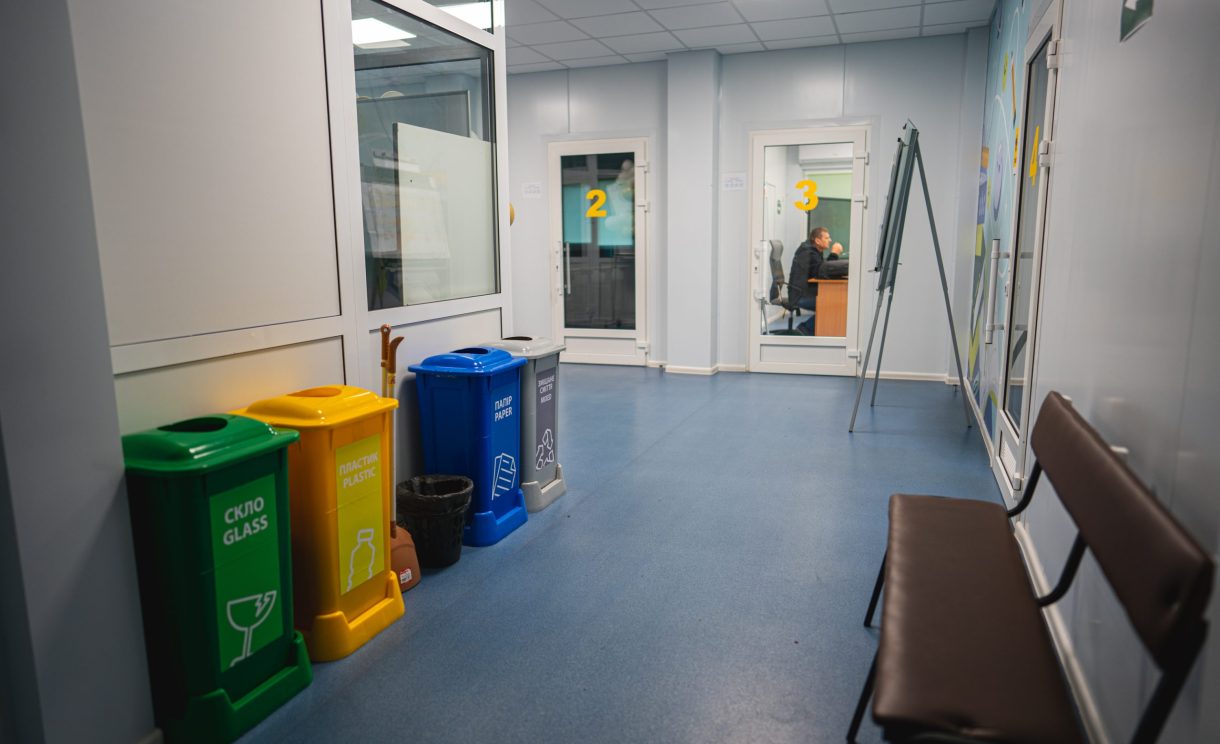
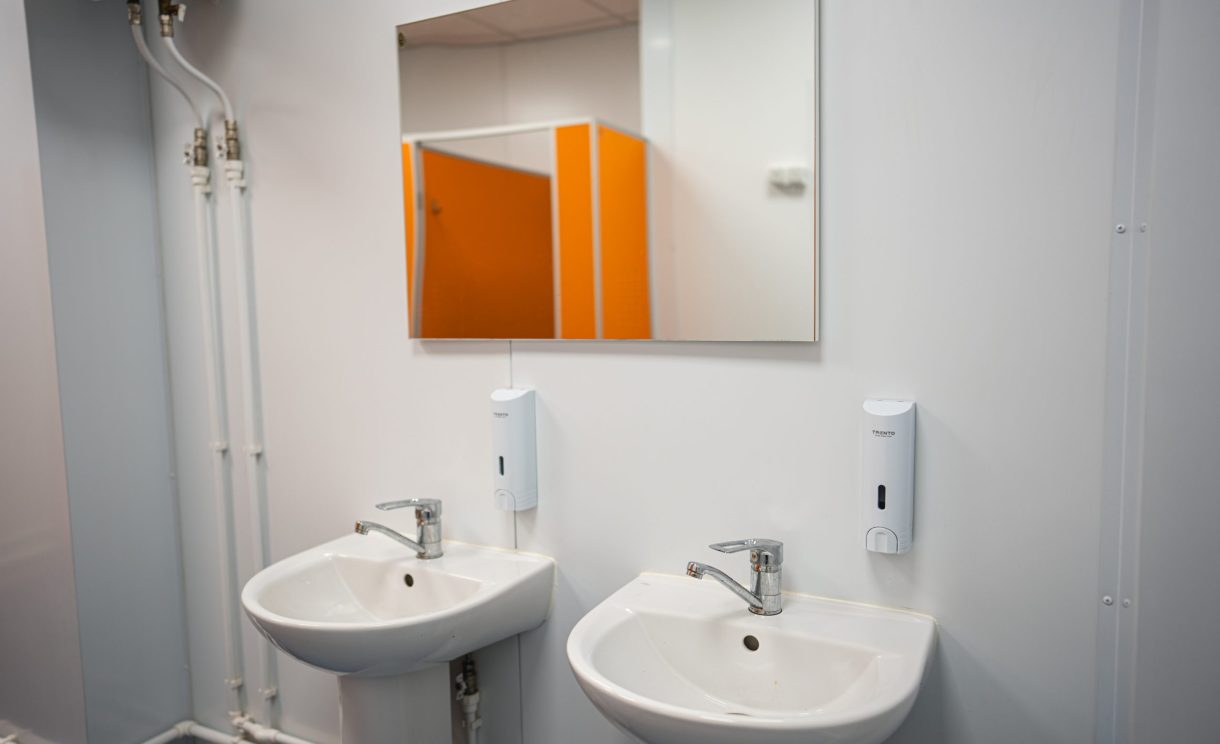
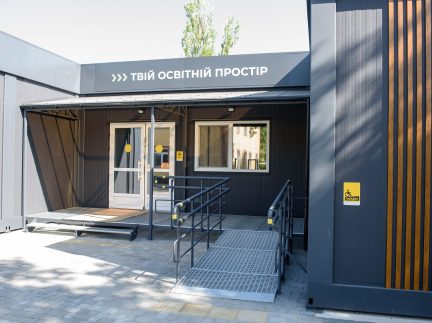
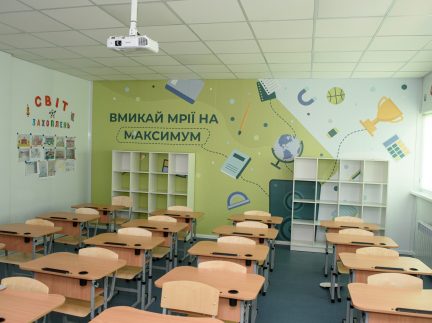
Bright, comfortable, and genuinely child-friendly, these standalone spaces offer a fast solution for communities that lost their schools to the war. Each unit includes four or six high-ceiling classrooms equipped with modern furniture, tablets, and interactive media panels. Inside, there’s also a spacious inclusive restroom, a teachers’ room, and a server room.
Each space has an accessible entrance with a ramp, and alternative energy sources keep the schools fully operational even during power outages.
- Regions Dnipropetrovsk, Kyiv, and Mykolaiv
- Students Minimum 6,000
- Result 6 temporary learning centers created
- Donor USAID UNITY Program, implemented by IREX
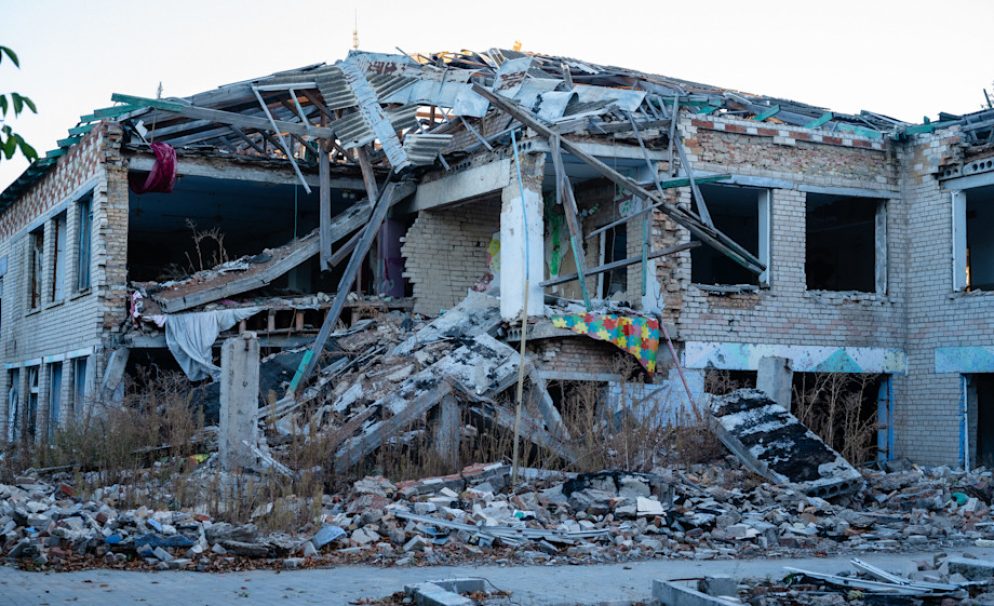
Nearly one in ten schools in Ukraine has been destroyed, and many more have been damaged.
Children are forced into remote learning — falling behind academically and losing social skills. When education infrastructure is wiped out, it’s a real tragedy: rebuilding is expensive, slow, and often impossible during wartime.
So communities urgently need a way to bring children back to offline learning — fast, but without compromising on quality or sustainability.
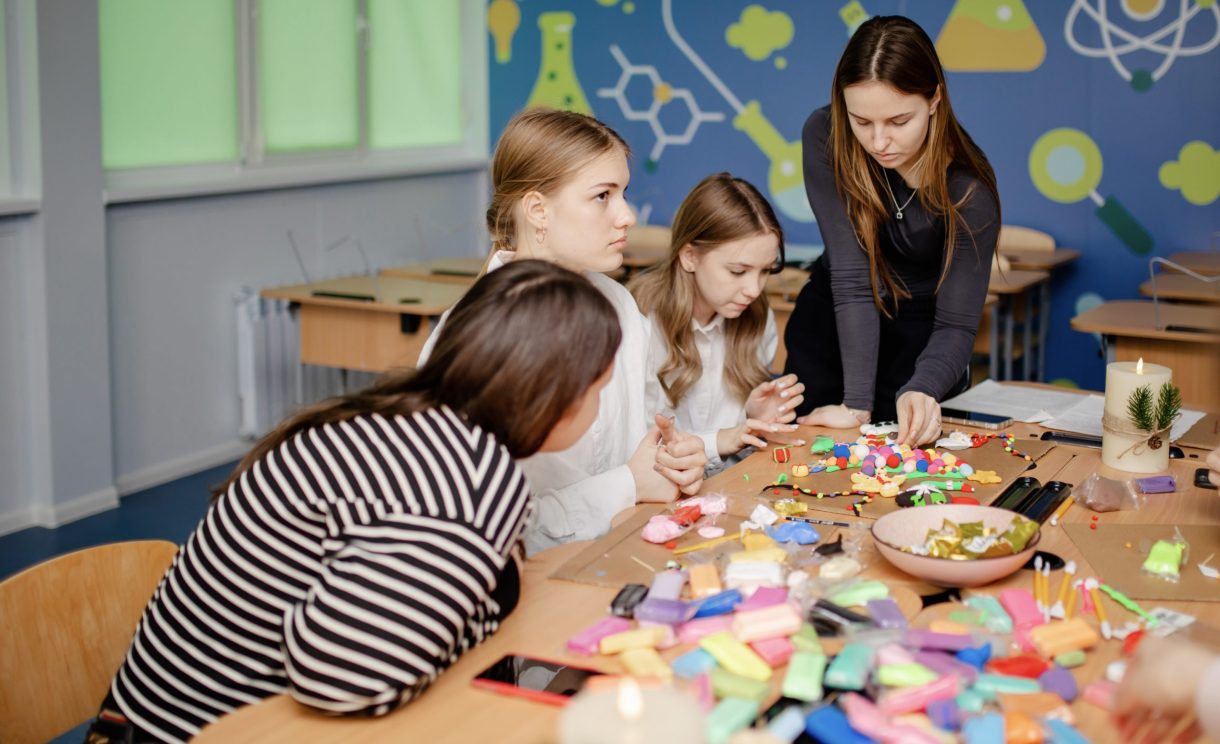
That’s exactly what Temporary Learning Spaces offer: modular schools manufactured in Ukraine and assembled on site like a construction set. Their key advantage is speed — installation takes about two months.
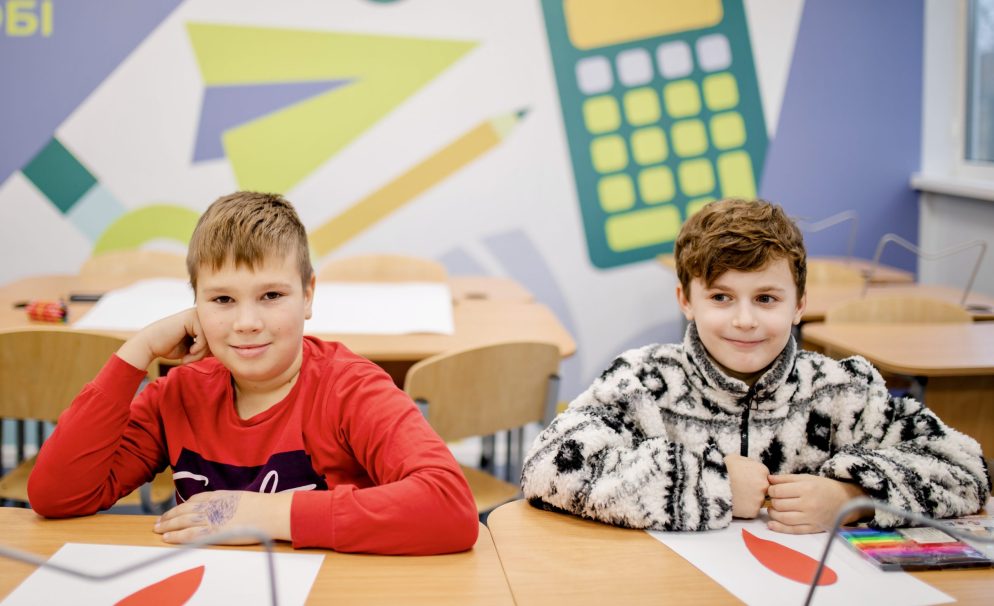
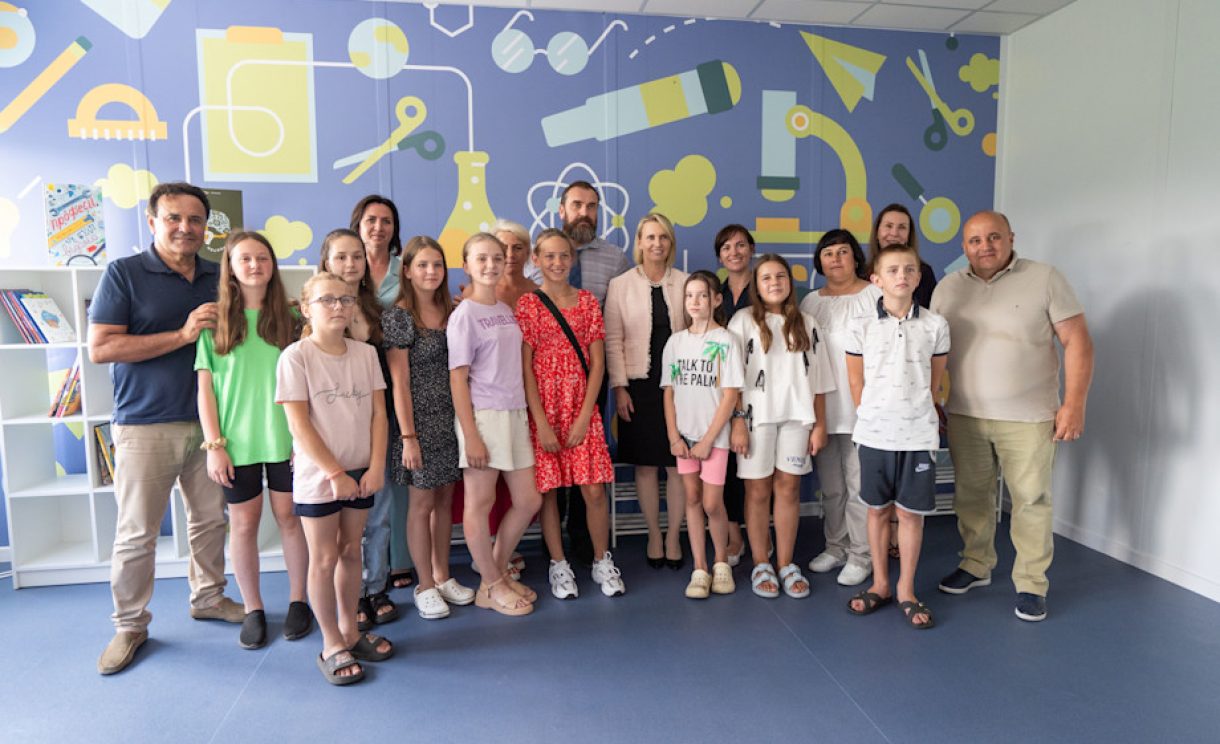
Through USAID’s UNITY program, implemented by IREX, we helped deliver TLS to places where they were needed most.
savED’s role was to identify the communities and settlements with the greatest need for safe learning spaces, while the IREX team handled the construction and setup of the facilities. Over the course of a year, new TLS opened in Kyiv, Mykolaiv, and Dnipro regions.
savED also supported the educational process itself: equipping teachers with updated materials, refreshing the curriculum, and preparing engaging activities for students. Meanwhile, GoGlobal — the project’s third partner — delivered its learning-recovery program in the spaces.
When launching this project, we focused first on communities that had lost their school buildings entirely and had no way to teach children offline.
Some of the locations were already familiar to us: for example, in Bohdanivka and Chervona Dolyna, we previously set up temporary schools inside local cultural centers, and in Pervomaiske and Apostolove, we created learning centers. The modular schools expanded this educational network, allowing more children to attend classes in their own communities — without traveling to neighboring villages or studying in shifts.
Region: Kyiv
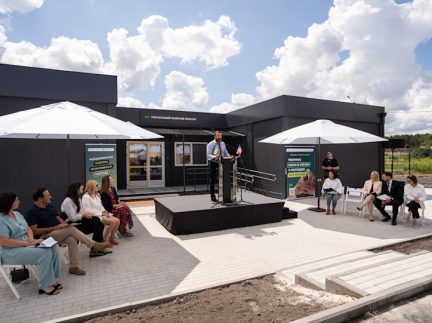
The school and kindergarten in Bohdanivka were destroyed by Russian forces during the occupation, forcing children to study in a neighboring village. The modular school, together with the temporary school set up in the local cultural center, allowed students in grades 1–9 to return to in-person learning in their own community.
Region: Mykolaiv
The village lived through occupation and extensive destruction, and its education facilities were completely wiped out. The modular school now gives children a chance to learn offline again — and gives displaced families one more reason to return home.
Region: Dnipropetrovsk
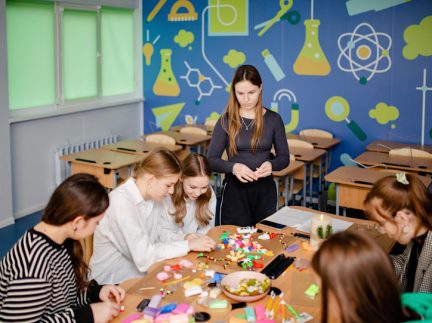
In the summer of 2022, a single Russian missile strike destroyed three of the city’s main secondary schools. One lyceum cannot be restored, and the other two require major reconstruction.
Region: Mykolaiv
This community is among the hardest hit in the region: active fighting took place here, and several villages were occupied. The school in Zelenyi Hai was completely destroyed by an airstrike in March 2022.
Region: Mykolaiv
Throughout 2022, the community remained on the frontline and suffered severe damage, including the loss of its main lyceum. savED set up a learning center inside the family medicine clinic, and the modular school made it possible for 220 local students to return to offline classes.
Region: Mykolaiv
The Shevchenkivska community found itself on the frontline from the first days of the full-scale invasion, with parts of it enduring eight months of occupation. Today, thanks to the modular school, the community can offer safe, comfortable offline learning for around 300 students.