
When Varvara was asked what she first feels when she hears an air-raid siren, she answered without hesitation: “Angry.” Not because she has to go down to the shelter, she explains, but because a morning alert may once again prevent her from going to school, seeing her friends, and spending time with them.
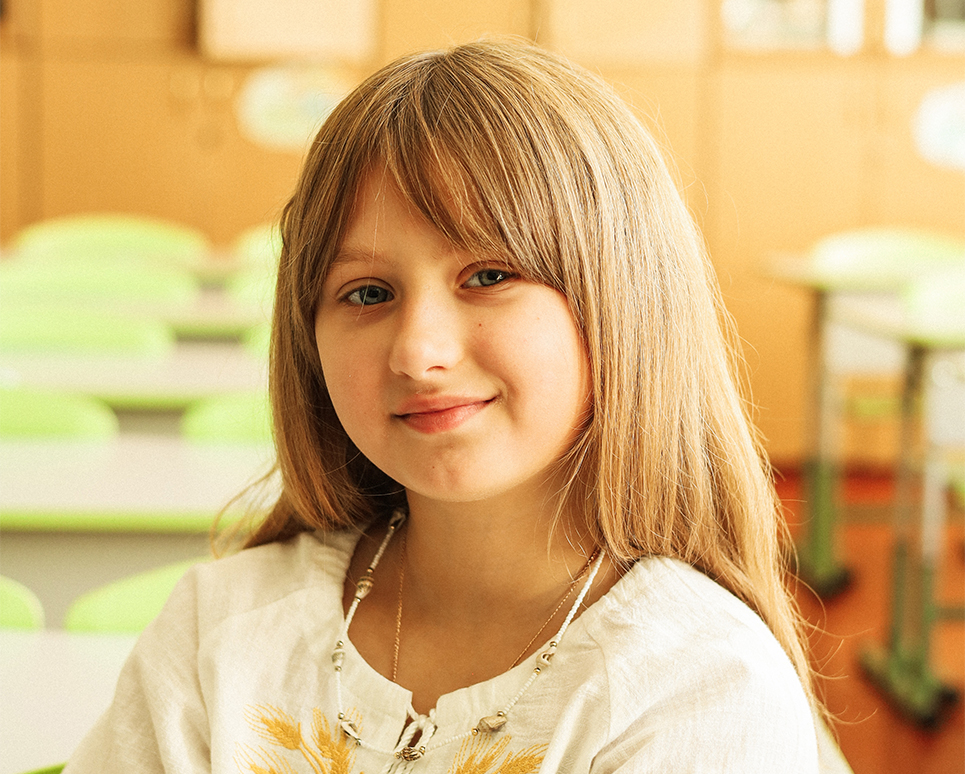
Varvara Matiushko is a pupil in Class 4-B at Chernihiv Gymnasium No. 20. She loves her school because of her friends, the interesting lessons, and her teacher, who makes everything easy to understand.
“I love going to school because my friends are here, and our teacher explains everything in such an interesting way. I enjoy learning,” Varvara says.
When an air-raid alert disrupts a child’s plans
Varvara’s mother, Halyna Matiushko, says that her daughter finds it particularly upsetting when an air-raid alert begins in the morning and disrupts her usual school day.
“We sometimes have moments like this: ‘Mum, there’s an air-raid alert. Does that mean I can’t go to school? But why? When will the all-clear sound? I want to go to school.’ Children are happy to go to school to see their friends and their class teacher. They are willing to continue learning, even in the shelter,” Halyna says.
For Varvara, school is about far more than lessons. It is a place where she can see her classmates, spend time with them, and remain part of her school community. That is why an air-raid siren does more than force her to change her plans. It sparks an entirely understandable childhood anger: once again, the war is trying to take away part of her everyday life.
A renovated, comfortable shelter designed for learning cannot stop air-raid alerts. It can, however, reduce their impact on Varvara and her classmates’ education.
The school where savED’s story in the Chernihiv region began
Varvara has attended Chernihiv Gymnasium No. 20 since her first year of school. She remembers how the school has changed, while her mother remembers its condition after the intense hostilities in the area.
In May 2022, savED co-founder Anna Putsova visited the school for the first time. By then, the building had sustained extensive damage.
“The school was in a terrible condition. It had been hit and badly damaged. It was very difficult to imagine that, before this, it had been a lively school attended by many children. What we saw had a profound impact on us and made us reassess the value of education,” Anna recalls.
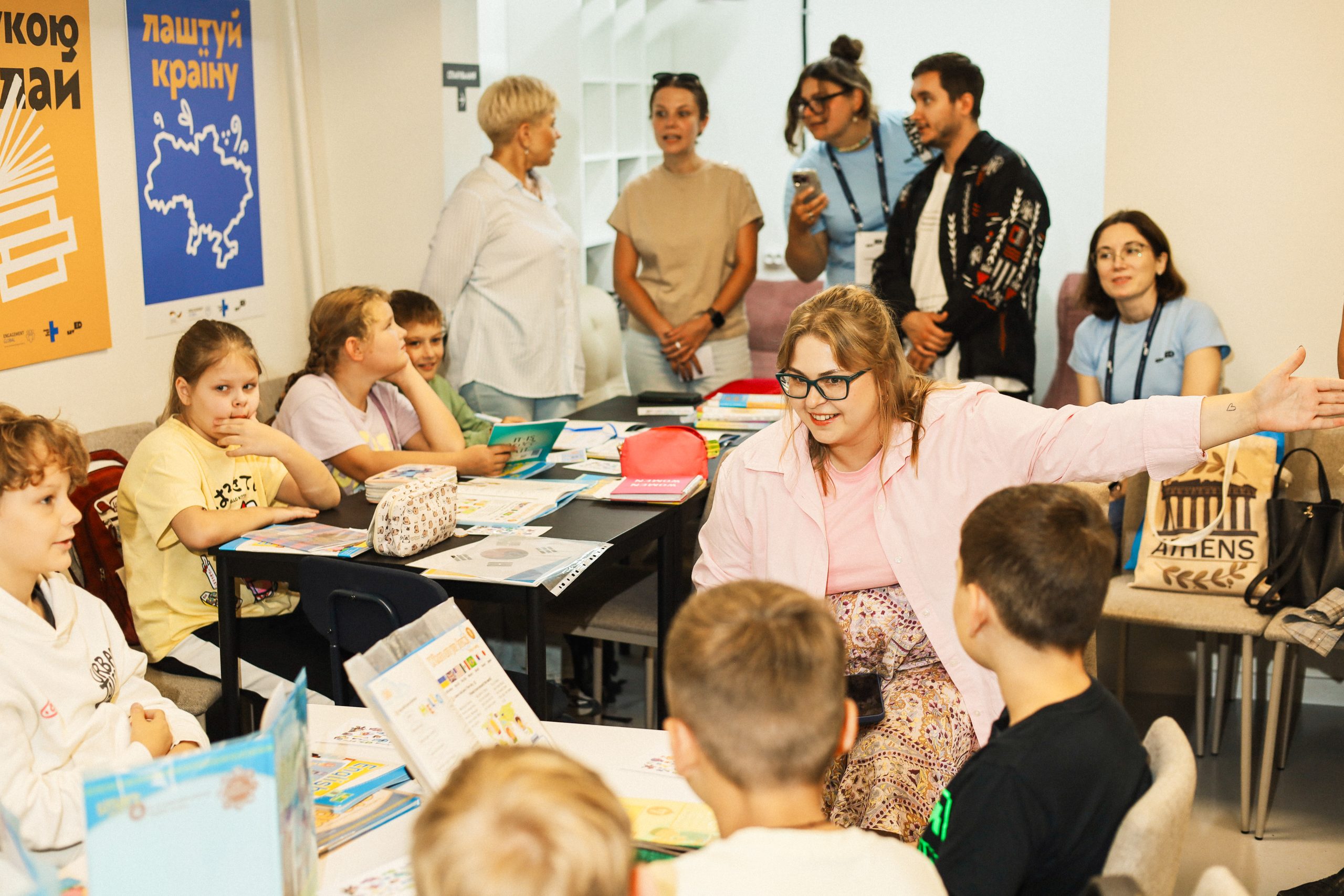
savED’s partnership with the school began with the creation of an EduHive learning centre. The foundation later helped restore the school’s internal infrastructure. At the same time, the school received support from other partners, the city’s education department, and the school team itself.
This time, savED returned to renovate part of the school shelter and create conditions for lessons to continue during air-raid alerts.
The work was carried out as part of the project “Resilient Education: Comprehensive Support for Children”, implemented by the savED Charitable Foundation in partnership with Kindernothilfe (KNH), with financial support from the German Federal Ministry for Economic Cooperation and Development (BMZ).
From a place to wait to a place to learn
Varvara’s parents say she and her classmates have used the school shelter since her first year. According to her mother, it previously provided only the essentials available at the time: painted walls, desks, and chairs. However, the conditions did not allow children to continue their lessons properly.
“Unfortunately, the children could not study in the shelter before. Now they can. That is the most important change,” Halyna Matiushko says.
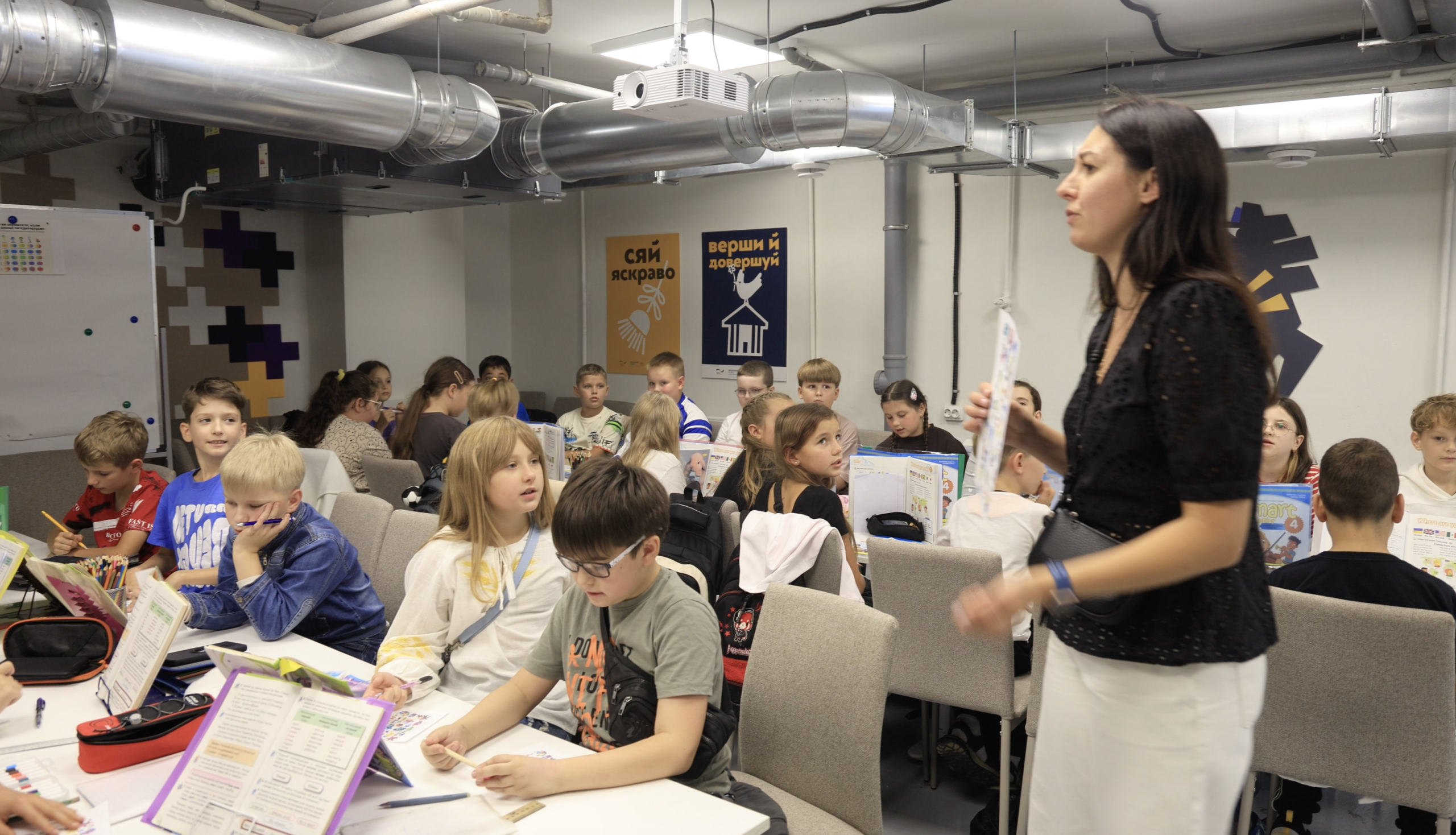
Following the renovation, the shelter offers considerably more space. Children can lay out their textbooks and notebooks, listen to their teacher’s explanations, and complete their assignments.
On the day the renovated shelter was opened, an air-raid alert began while the fourth-year pupils were in class. They went down to the shelter and continued their Ukrainian language lesson there.
“Everything has been made really nice, and there is much more space now. We don’t have to sit on each other’s laps anymore. Everyone can sit comfortably; it isn’t cramped, and it is comfortable to study,” Varvara says.
She adds that she can concentrate on her work and does not find learning in the renovated shelter more difficult than learning in a regular classroom.
“Studying in the shelter isn’t more difficult than studying in the classroom. There is plenty of space now, and everyone can sit comfortably,” she says.
For Varvara’s mother, it matters not only that her daughter can continue her lessons, but also that she feels safe and comfortable in the space.
“My daughter is happy that she can be at school. She knows there is a shelter here, that she feels protected there, and that she can continue learning,” Halyna explains.
A space that helps preserve a child’s school day
The impact of the renovation is best understood not through the size of the space or a list of completed works, but through Varvara’s own experience.
Now, when an air-raid alert begins during the school day, her lesson can continue in the shelter. She can sit beside her classmates, open her books and notebooks, listen to her teacher, and complete her assignments.
Varvara still feels angry when she hears the siren. The renovated space cannot take that feeling away, nor can it restore the entirely carefree school life that every child deserves. But it helps ensure that an air-raid alert does not also take away her lessons, her friends, and her sense of an ordinary day.
Because a safe space gives a child back more than the opportunity to continue a lesson; it gives them connection, stability, and a part of their childhood.


